
Food Patterns
Weighing the Weekly Rhythm of the Plate
How the weekly pattern of food choices and eating habits produces a clearer picture of weight-related nutrition than any single day's record.
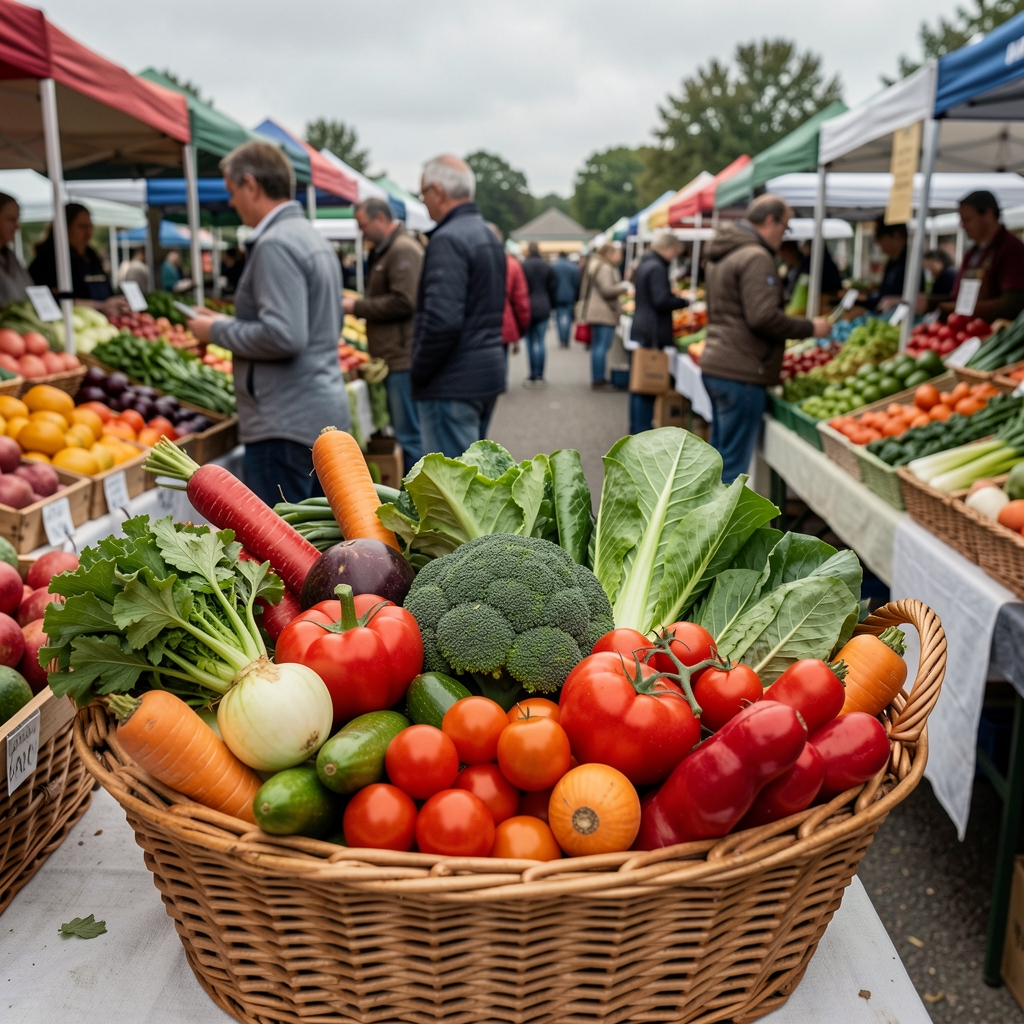
The English autumn is, nutritionally speaking, one of the more generous seasons. Celeriac and swede appear in the markets alongside kale and cavolo nero, late-harvest tomatoes still hold some warmth, and the parsnip — underrated in every other month — comes into its own against the cold. For those attentive to the relationship between what they eat and how their weight shifts across the year, autumn offers a particular kind of abundance worth recording.
There is a quiet logic to eating seasonally that nutritional awareness tends to reinforce. When autumn arrives, the character of the plate shifts: the lighter, high-water-content salads of summer give way to root vegetables and brassicas that carry more fibre, more density, more of what the colder months seem to call for. The body's rhythm — its shifting appetite across the year — is not entirely a matter of convenience or habit. It is also a response to what the season is offering.
From a nutritional standpoint, the autumn harvest is particularly well suited to the kind of whole-foods approach that supports gradual weight awareness. Root vegetables — parsnips, celeriac, turnips, beetroot — contribute to a sense of fullness between meals in a way that lighter produce sometimes does not. Dark leafy greens carry nutritional variety across a range of micronutrients. Squash, in its many forms, holds a particular position in the autumn kitchen: warming, adaptable, and well-suited to batch cooking of the kind that supports a consistent weekly rhythm.
What the seasonal produce calendar does, for someone paying attention to their weight across the longer arc of a year, is provide a natural variation in what appears on the plate. This variation is, in itself, a nutritional asset. Dietary variety — across vegetables, fruit, legumes, and whole grains — supports a broader nutritional balance than a fixed, year-round menu of the same ingredients. The changing of the season is, in nutritional terms, a prompt to diversify.
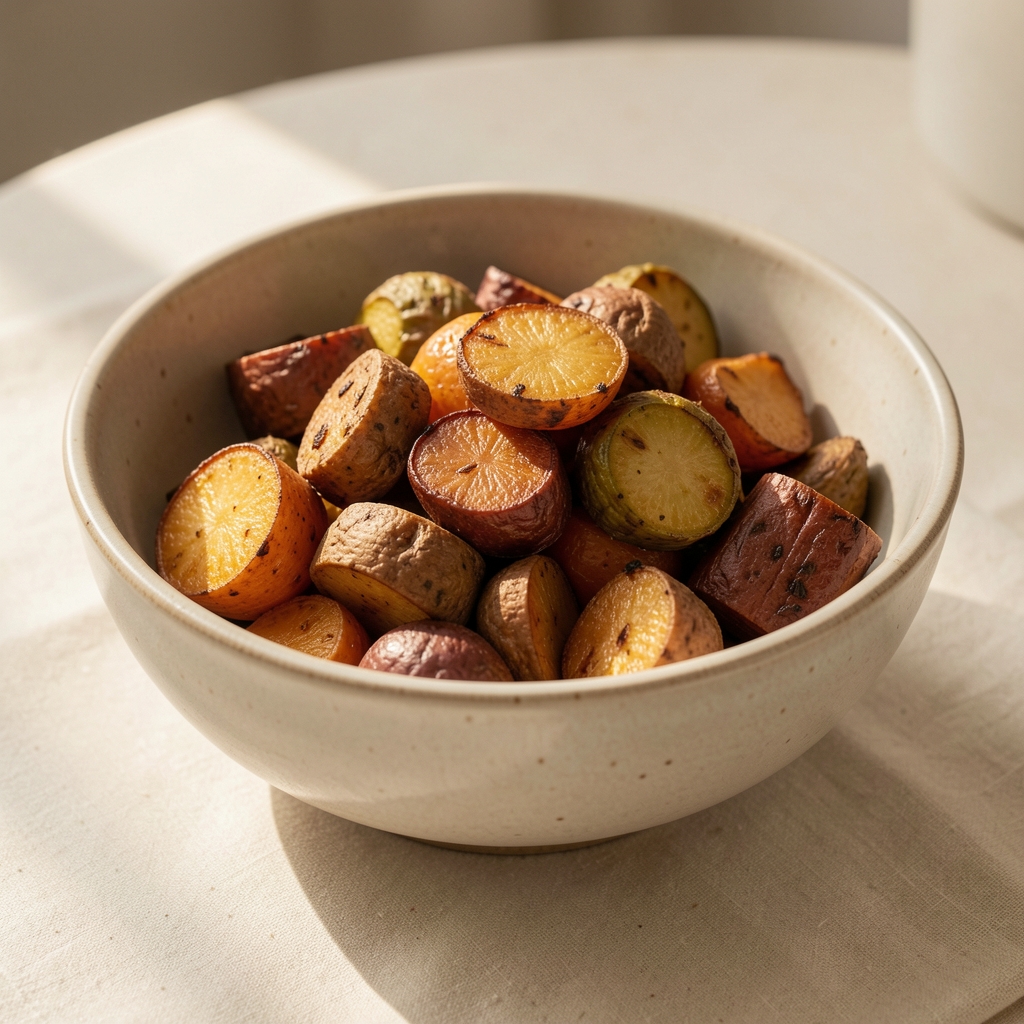
Autumn root vegetables — roasted and composed for a weekly meal rhythm
Autumn is also the season that makes plant-based eating feel most natural. The hearty qualities of legumes — lentils, chickpeas, white beans — that can feel incongruous in summer align perfectly with the season's produce. A slow-cooked lentil soup with cavolo nero and a handful of roasted celeriac is not a compromise or a dietary statement. It is simply a very good autumn meal, and it happens also to be one that supports nutritional balance and a sense of fullness without large portion volumes.
The relationship between plant-based meals and sustained weight balance is one that emerges gradually in a food journal kept across several months. It is not a dramatic or sudden observation. It is more like a slow accumulation of evidence: the weeks when legumes and vegetables dominate the weekly record tend to show a different arithmetic, in terms of portion volume relative to fullness, than the weeks when the plate is more centred on processed convenience foods or large quantities of refined carbohydrates.
This is not a directive. The editorial approach at Talevo Field Notes does not make prescriptive claims about what any individual should eat. It is an observation from the literature and from the field: that a diet rich in seasonal vegetables, legumes, and whole foods — the kind of diet the autumn calendar naturally encourages — tends to support a sense of nutritional sufficiency that makes large portions feel less necessary.
"The changing of the season is, in nutritional terms, a prompt to diversify."
One of the recurring observations in nutritional research on weight and food habits is that cooking from scratch — regardless of what is being cooked — tends to correlate with greater awareness of what is going into a meal and how much. The act of preparation itself is a kind of nutritional mindfulness, in that it makes the ingredients visible rather than obscured behind a product label.
Autumn, with its emphasis on produce that benefits from time and heat — roasting, slow cooking, soup-making — is a natural season for this kind of kitchen engagement. A celeriac roasted whole, then pulled apart over the course of a week's meals, is a different experience from reheating a packaged product. The former requires nothing more than time and a hot oven, but it produces a kind of nutritional engagement with the ingredient that the latter cannot.
For those keeping a food journal with attention to weight and body awareness, the autumn kitchen offers a particularly rich set of observations. How does the body respond to a week of genuinely varied vegetable intake, compared to a week where the same few ingredients appear repeatedly? What happens to portion sizes when the plate is genuinely colourful — beet and kale alongside golden parsnip and dark squash — compared to when the plate is mostly a single carbohydrate base?
It would be incomplete to discuss the autumn nutritional calendar without attention to its fruit. England's autumn is apple and pear country. Bramley apples, Cox's Orange Pippin, Conference pears — these are not the glamorous, tropical fruit of summertime. They are quieter, cooler, more suited to being baked alongside a meal than eaten on their own in the heat. But their role in the weekly record is significant.
Fruit in the daily diet — present in the food journal as a regular, unremarkable feature rather than a special occasion — contributes to nutritional variety in ways that are easy to overlook. It is not simply a matter of specific nutrients. It is also a matter of the habits that fruit presence signals: a kitchen that has fruit visible on the counter tends to be a kitchen where snacking happens differently than one that does not.
The autumn produce calendar, taken whole — its roots, its greens, its apples, its squash — is a remarkably complete nutritional palette. The person who eats what the English autumn offers, cooked simply and recorded honestly, has access to most of what a nutritionally varied diet requires. The season, in this sense, does a significant part of the nutritional planning automatically. One needs only to pay attention to what it is offering.
For the reader interested in aligning their weekly food rhythm with the seasonal produce calendar, a few observations from practice. Borough Market and most of London's independent greengrocers carry the full autumn range from late September through December. A weekly visit — or even a fortnightly one — is enough to establish what is available and to build a shopping rhythm around it.
The practical discipline of seasonal shopping is, at root, a form of menu planning. When the week's vegetables are determined by what the market is offering at its best rather than by a fixed list carried from last month, the plate naturally diversifies. The food journal, kept alongside this seasonal rhythm, tends to show a more varied and nutritionally interesting record than one built on year-round supermarket staples. The pattern, observed over several autumn seasons, is one of the clearer relationships between food habits and weight awareness that editorial observation of daily nutrition has to offer.

Eleanor Whitfield is the lead editor at Talevo Field Notes, with a background in nutritional science and ten years of writing on food, weight awareness, and daily eating habits.
More from Eleanor →
How the weekly pattern of food choices and eating habits produces a clearer picture of weight-related nutrition than any single day's record.

How daily movement patterns intersect with food choices, portion sizes, and the gradual arithmetic of weight balance over weeks and months.